Understanding the debate
The current wave involves different groups. The 17 Octobre Gilet Jaune initiative, the Coordination nationale lycéenne and the CGT publish their own calls. They may choose the same date without sharing an organisation or a common programme.[5][6][7]
The demands reviewed include living standards, wages and pensions, public services, education, Parcoursup and the conditions in which people can exercise the right to protest. Each demand should be attributed to the group that published it.[5][6][7]
Why are these protests happening now?
The calls do not have a single cause. The 17 Octobre Gilet Jaune initiative highlights purchasing power, pensions, public services and criticism of the executive. The CGT focuses on issues including wages, jobs and public services. The high-school coordination has its own demands on education and Parcoursup.[5][6][7]
These themes overlap, but the sources do not describe a single coalition. Sharing a date shows a temporary convergence; it does not make one group’s demands those of every participant.[5][6][7]
Who is calling for protests?
Three broad groups appear in the selected sources: an initiative associated with the Yellow Vests, trade unions and a high-school coordination. Their statements set different priorities, dates and methods of action.[5][6][7]
October 24 shows this overlap: several calls target the same day, while the Paris Police Prefecture distinguished between a Bastille–Nation route that may go ahead and a Bastille–Opéra route intended to be prohibited.[5][6][8][9]
Peaceful protests, violence and looting are not interchangeable
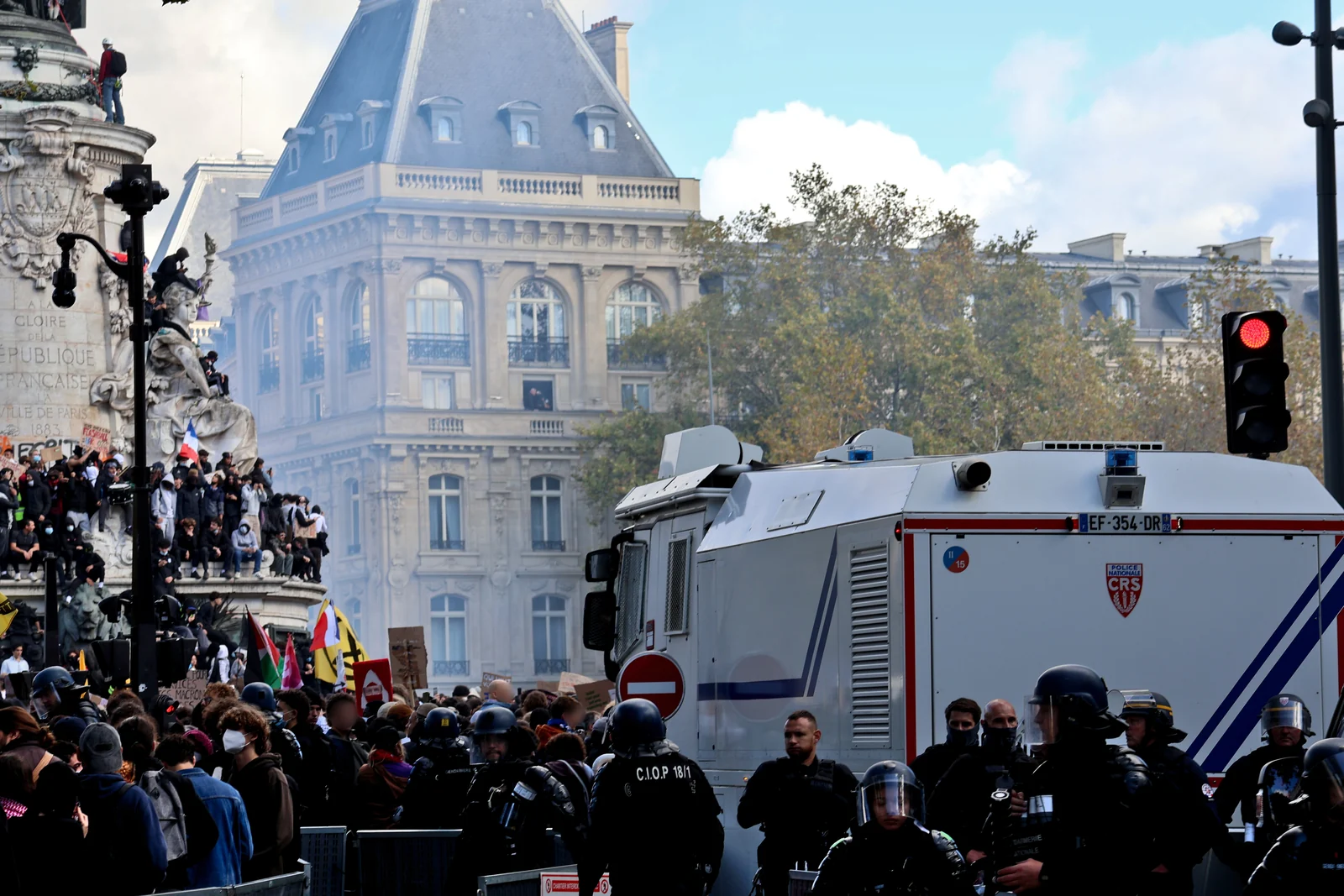
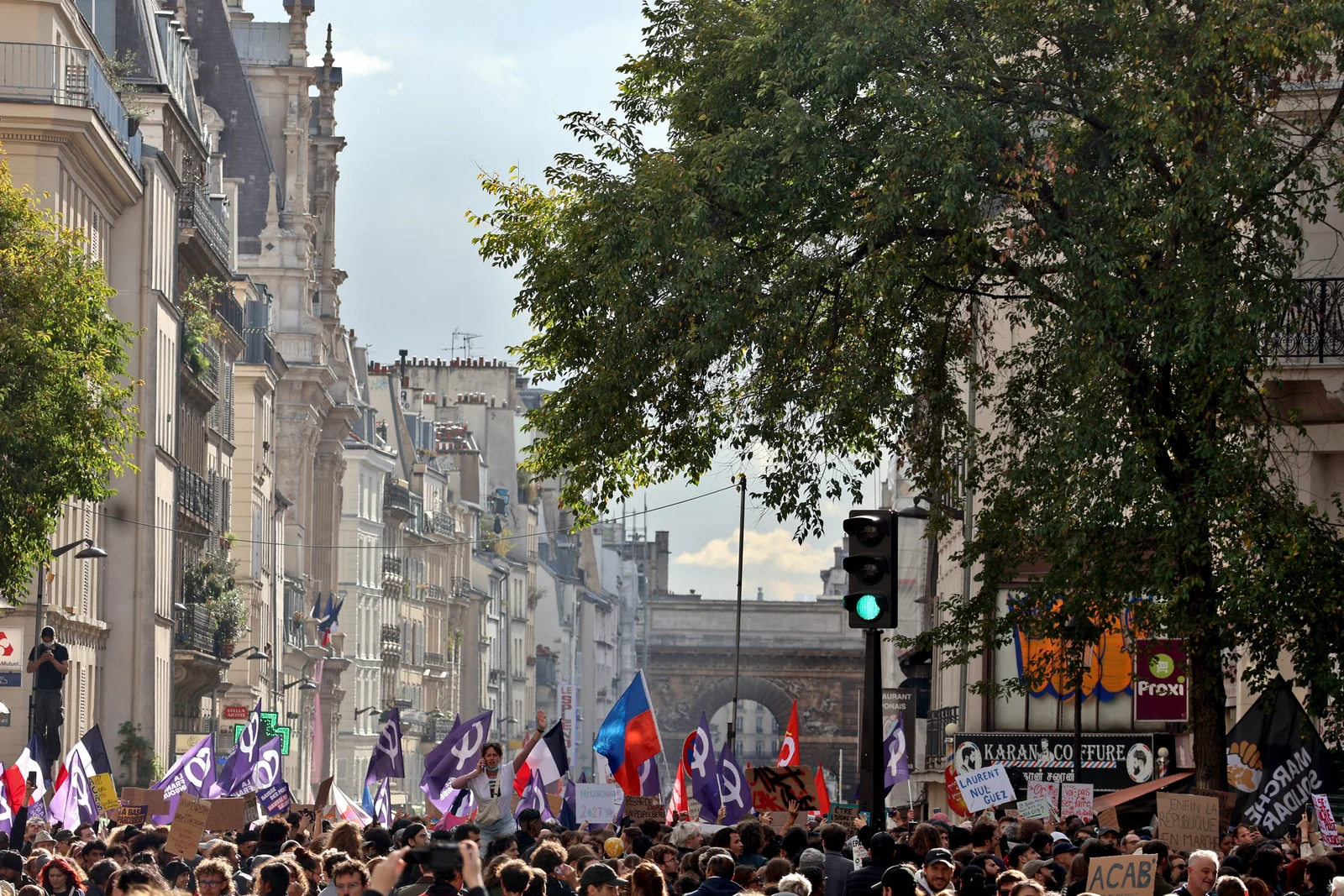
On October 17, Le Monde reported large marches in several cities, followed by violence, fires, damage and looting later in the day. This sequence helps explain why searches and headlines use the terms ‘protests’, ‘violence’ and ‘riots’.[1]
The available reporting does not support attributing these acts to all protesters. Announced judicial investigations and parliamentary work should be distinguished from political accusations and immediate generalisations.[1][2][3]
How has the government responded?
After the violence, the government emphasised prosecutions, analysis of video footage, local curfews and support for affected businesses. This response addresses the consequences of the violence; by itself, it does not answer the social demands.[2]
After a meeting at Matignon, the CGT said that no measures addressing the demands had been announced and called for the strike to expand from November 5. This is the CGT’s assessment.[4]
What is happening now?
As of October 23, the next documented dates are October 24, with separate calls and a reported Paris route from Bastille to Nation, followed by November 5, the target of a broader union call. Check the event and calendar pages for times and decisions in each city.[5][7][8][9]
An announced date does not establish future turnout or the impact on transport, schools or public services. Those points can only be confirmed through local publications and observations after the event.[7][8]
Timeline
Demands and positions
17 Octobre Gilet JauneInitiative behind calls for October 17 and 24
Highlights purchasing power, pensions, public services, the citizens’ initiative referendum and criticism of the executive.[5]
National high school coordinationCoordination of high-school organisations and collectives
Puts forward demands on education, resources, Parcoursup and high-school students’ right to mobilise.[6]
CGTTrade union
Advocates demands on wages, jobs and public services, and calls for the strike to broaden on November 5.[7][4]
GovernmentPublic response after the violence
Emphasises prosecutions, local security measures and support for affected businesses.[2]
What is confirmed
Several organisations have published separate calls and demands; the sources do not describe a common leadership for all the protests.[5][6][7]
October 17 combined large marches with violence, damage and looting reported later by the press.[1]
Calls have been published for October 24 and November 5; in Paris, the authorities distinguished between two routes for October 24.[5][7][8][9]
What remains to be verified
The number of people who will take part in the upcoming days of action and the actual national reach of the calls.[5][7]
The identity and responsibility of everyone involved in violence or looting: the available reporting does not support attributing these acts to all protesters.[1][2]
Future disruption to transport, schools and public services, which depends on local arrangements and actual participation.[7]
Sources and verifications
- October 17 mobilisation: crowds of protesters, violence and looting
Le Monde · Published on Oct. 18, 2026 · Checked on Oct. 22, 2026
National report on the day, used to distinguish the marches from the violence and looting reported later.
- Interministerial crisis meeting: update from the Prime Minister
French government · Published on Oct. 19, 2026 · Verified on Oct. 22, 2026
Official source for measures announced after the crisis meeting; it sets out the government’s position.
- October 17 protests: October 22 ban in Paris, parliamentary inquiry and follow-up
Le Monde · Published on Oct. 21, 2026 · Checked on Oct. 22, 2026
Live coverage used for the institutional follow-up and announced timetable.
- ‘The strike must take over’: CGT calls for mobilisation on November 5 and beyond
Le Parisien · AFP · Published on Oct. 21, 2026 · Verified on Oct. 22, 2026
Report after the Matignon meeting; the assessment that no measures were announced is attributed to the CGT.
- Macron must go and make way for the people!
17 Octobre Gilet Jaune · Checked October 22, 2026
Source for the demands and dates published by this initiative; it does not automatically represent every participant.
- Statement from the Coordination nationale lycéenne meeting of October 18, 2026
CNL Liaison Committee · Paris-luttes.info · Published on Oct. 21, 2026 · Verified on Oct. 22, 2026
The CNL’s own statement; it documents its calls and demands without representing all high-school students.
- CGT calls for the strike to broaden on November 5
CGT · Published on Oct. 21, 2026 · Checked on Oct. 22, 2026
Official CGT source on its demands, November 5 and its position on October 24.
- October 24 protest: Paris route authorised between Bastille and Nation
ICI Paris Île-de-France · Published on Oct. 22, 2026 · Verified on Oct. 22, 2026
Reports the statement issued by the Police Prefecture about the two Paris routes.
- Protest route approved in Paris for Saturday, October 24
RMC · Published on Oct. 22, 2026 · Verified on Oct. 22, 2026
Secondary source for the 2 p.m. start, the Bastille–Nation route and the proposed route to Opéra.
Updates
Created this general explainer covering demands, organisations, the distinction between marches and violence, the public response and upcoming dates.
Also read
A useful file for those around you?