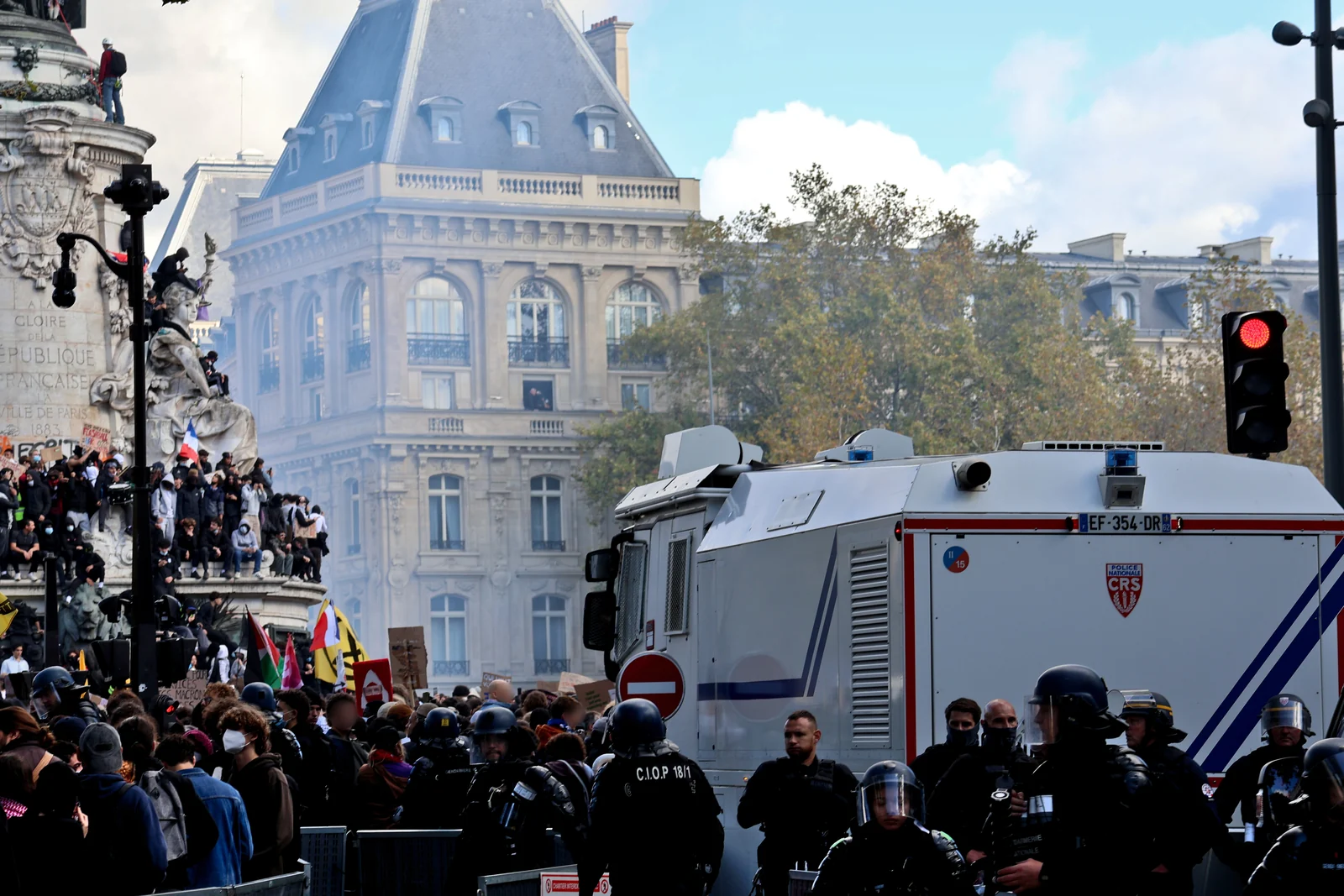
Understanding the debate
French law relies, for the processions and gatherings concerned, on a prior declaration. In Paris, it is addressed to the Police Prefecture. This regime does not amount to systematically requesting prior permission to express an opinion in the street.[1][3]
To understand an announcement, ask three questions: who announces the gathering? What document establishes the terms and conditions? Is there a police decision applicable to this date and location? These responses may change between a first call and the scheduled day.
“Declared”: the terms and conditions are transmitted to the administration
Article L211-2 provides for a declaration between three and fifteen clear days before the event. It identifies the organizers, indicates the purpose, location, date, time and, when there is a procession, the planned route. The authority which receives it issues a receipt. The legal deadline is expressed in clear days; it should not be replaced by a simple count of hours.[1]
An organizer can say that they have sent this declaration without publishing their receipt. In this case, an editorial staff can report their ad by naming them. It cannot present an unconsulted document as verified. The formula “deposit announced by the organizers” precisely describes this limit.
“Authorized”: a common shortcut to use with precision
In a decision of July 6, 2020, the Council of State recalls that, under the ordinary regime, a declared demonstration is free in the absence of a ban. The decision concerned the exceptional superposition of an authorization regime during the health crisis; it helps to distinguish the two mechanisms without transposing health rules to today.[3]
In the news, “authorized” can mean that the route has been agreed with the authorities or that no ban has been announced. To know what is really established, you must read the cited text. The absence of a decree found by our editorial team does not constitute, in itself, proof of the absence of any restriction.
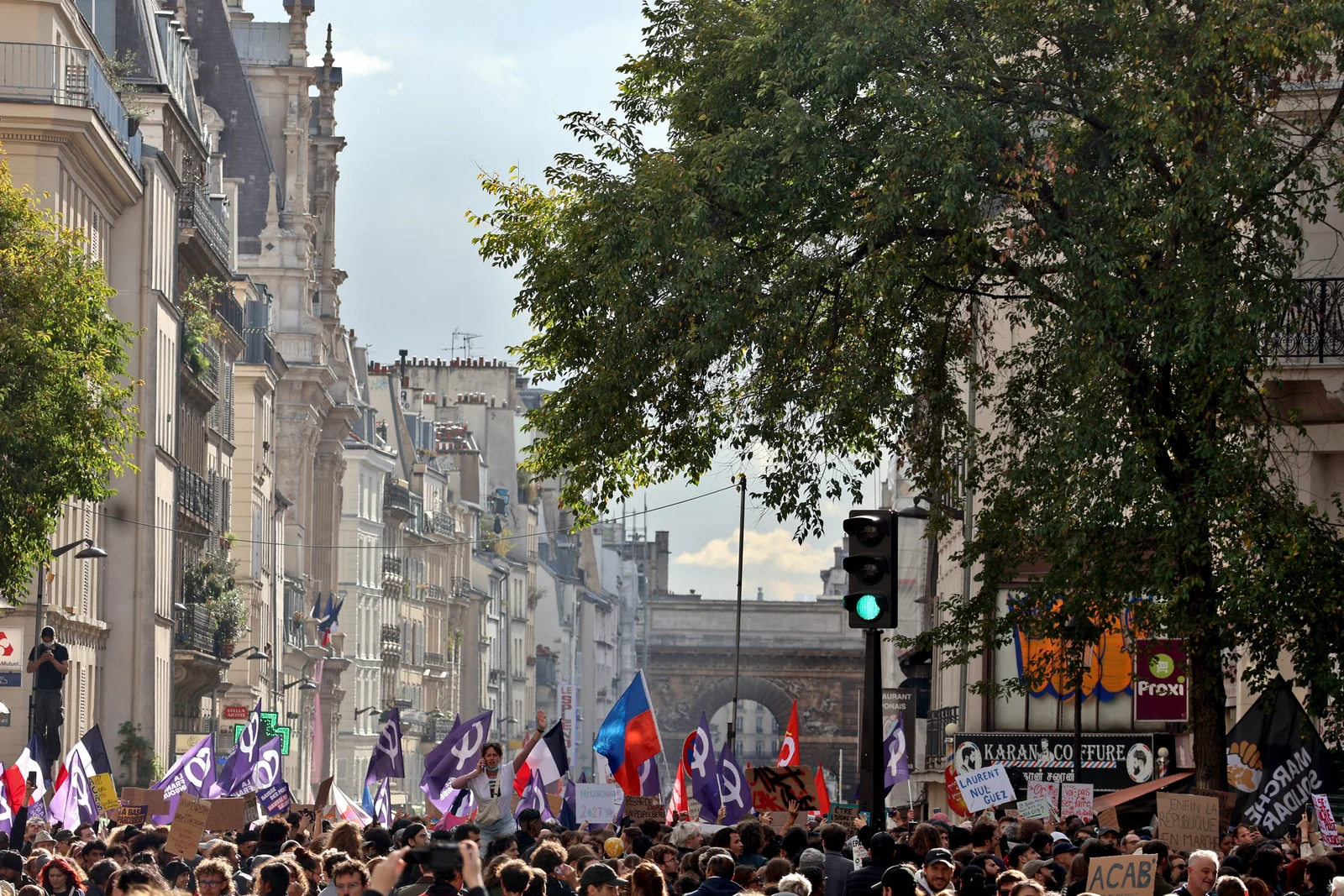
A declared route can still be developed
The statement describes a projected route. In its decision of December 4, 2023, the Council of State specifies that before a ban, the administration must examine whether less restrictive measures, such as an adaptation of the route or duration, can prevent the risks cited.[4]
A plan released early can therefore become obsolete. Check the most recent version, its date and its scope: does it concern the starting point, the entire procession or only certain sectors? A route announced for another day does not allow us to reconstruct that of the next meeting.
“Prohibited”: search for the order and its scope
Article L211-4 provides for an order when the police authority considers that the planned demonstration is likely to disturb public order. It provides for its notification to the signatories of the declaration. This is a different decision than a public disagreement or a political statement.[2]
The Council of State recalls that restrictions must be adapted, necessary and proportionate. Before summarizing a measure with “all demonstrations are prohibited”, check the text: dates, times, streets, places and people or gatherings targeted. A partial ban does not automatically describe an entire city.[4]
What information should you check before a gathering?
Note the appointment announced by the organizer, then search for the information published by the prefecture and any decisions that concern it. Compare update dates. If the pieces contradict each other, maintain this discrepancy instead of merging the announcements into a supposedly certain schedule.
For October 24 in Paris, the press reports a Bastille–Opéra project transmitted by the coordination. Our file characterizes it as an announced declaration. It does not infer an agreement on the detailed route nor the absence of restrictions: the corresponding documents remain to be obtained.[5]
Chronology
Version of article L211-2 consulted
The text sets out the declaration procedures and the delivery of a receipt.[1]
Distinguished declaration and authorization
The Council of State examines the exceptional health regime with regard to the ordinary regime.[3]
Examine less restrictive measures
The Council of State mentions in particular the adaptation of an itinerary or a duration.[4]
An example: the Parisian route of 24
The filing is announced by the organizers and reported by the press; local parts still need to be checked.[5]
Demands and positions
OrganizersAuthors of the declaration
Transmit the purpose and planned methods, with the identity of those responsible.[1]
Police authorityCompetent administration
Receives the declaration and can make a restriction decision within the legal framework.[2]
Administrative judgeControl of decisions
Controls in particular the necessity and proportionality of the measures taken.[4]
What is confirmed
What remains to be verified
For each event: receipt of your declaration, the route ultimately chosen and any local restrictions.
A general article or an old order is not sufficient to determine the status of a new event on another date.
Sources and verifications
- Internal security code: article L211-2
Légifrance · Verified on Oct 21, 2026
Text of the version in force since April 12, 2019, verified in the version dated March 26, 2026 and cross-checked with the Council of State.
- Internal security code: article L211-4
Légifrance · Verified on Oct 21, 2026
Text relating to the ban order; does not constitute a prohibition applicable to a particular date or city.
- Decision No. 441257 of July 6, 2020
Council of State · Published on July 6, 2020 · Verified on October 21, 2026
The decision distinguishes the ordinary declaration regime from an authorization regime instituted during the health crisis.
- Decision No. 487984 of December 4, 2023
Council of State · Published on Dec. 4 2023 · Checked Oct 21, 2026
Decision on the freedom to demonstrate and the examination of less restrictive measures before a ban.
- October 24 demonstrations in Paris: route, yellow vests, students, unions
Le Parisien · Published on Oct. 21, 2026 · Verified on Oct. 21, 2026
Statement from the organizer reported on October 21. The receipt and any police requirements were not consulted.
Updates
Creation of decryption based on the Internal Security Code and decisions of the Council of State. The Parisian example remains distinct from the general rules.
Also read

A useful file for those around you?